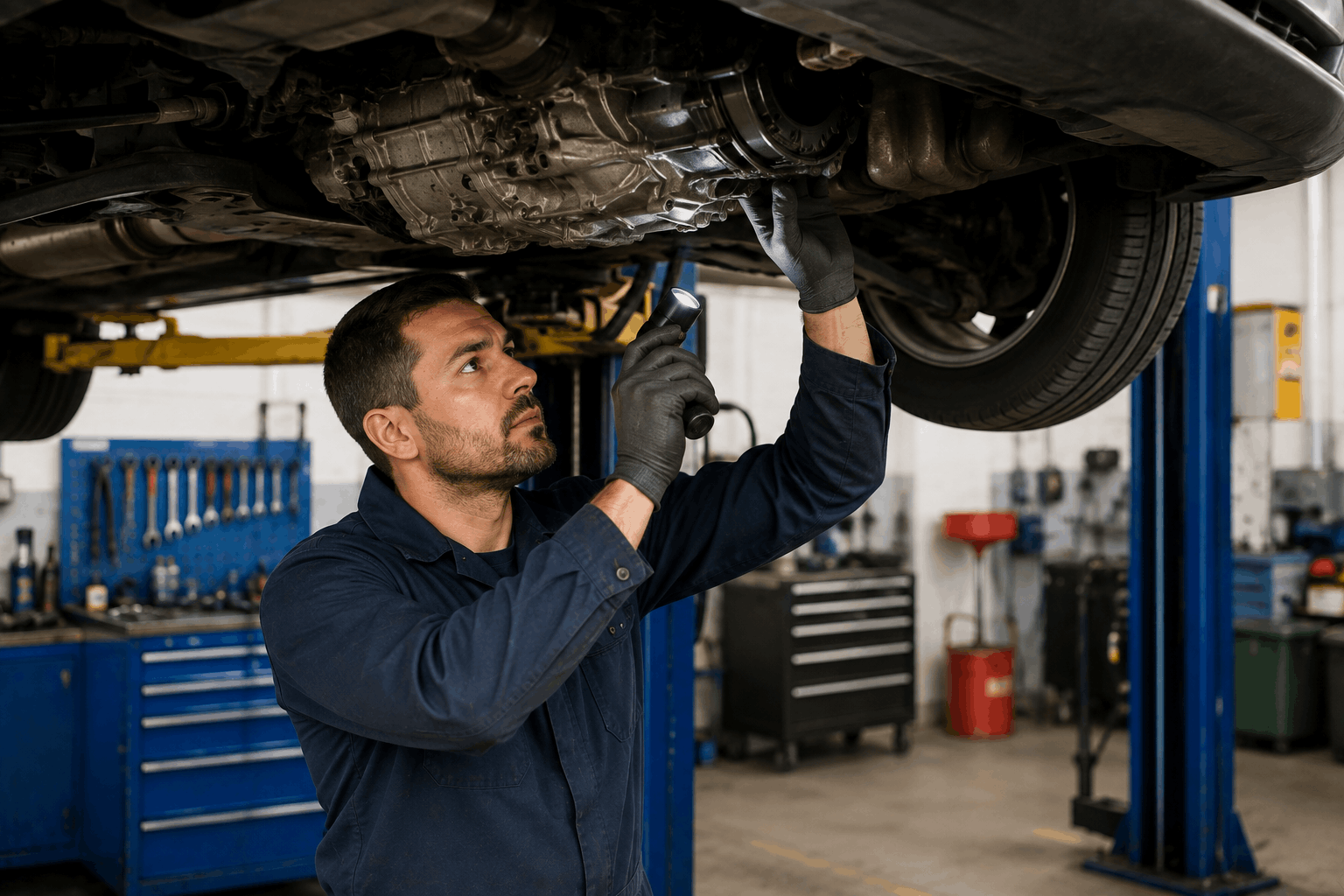
A manual gearbox rarely fails without signalling the problem first. Grinding during a shift, a transmission whine, resistance when selecting gears, or a ratio that disengages under load each indicate developing faults.
The harder part is interpreting what each symptom actually identifies. Grinding on one gear points somewhere different from grinding across several. A whine that appears under load differs from one that tracks vehicle speed. A gear jumping out on acceleration means something different from one that slips during deceleration.
Accurate diagnosis before any repair decision is what separates a targeted fix from unnecessary expenditure.
Victoria Differentials has built a strong reputation for manual gearbox repairs in Melbourne. Rather than treating every noise as proof a gearbox rebuild is needed, the team works out when and how each symptom occurs before deciding on a course of action.
Main Warning Signs: Grinding gears, a bearing whine, trouble selecting gears, gears jumping out, and fluid leaks all point toward a developing manual gearbox issue.
Key Considerations: Clutch operation, synchronisers, bearings, gears, selector components, and lubrication each play a part in how well a gearbox performs.
Professional Insight: Victoria Differentials suggests getting professional assessment to know exactly what’s wrong with the internal gearbox damage.
Related Service: Once inspection confirms internal wear, a gearbox rebuild or a more targeted repair may suit the situation, depending on what condition the gearbox is actually in.
Gear Crunching: What It Signals and Where to Look First
Gear crunching occurs when gearbox components fail to synchronise before engagement. Worn synchronisers produce this pattern, particularly where the same gear generates the grinding sound repeatedly.
The clutch produces an almost identical symptom. That is where investigation should start. A clutch that does not fully disengage leaves the input shaft rotating during a gear change. That rotation makes multiple gears difficult to select and generates grinding across more than one ratio.
| Symptom | Possible Area to Inspect |
|---|---|
|
One gear consistently crunches |
Synchroniser or internal gearbox wear |
|
Several gears are difficult |
Clutch release, linkage, or internal components |
|
Reverse crunches while stationary |
Possible clutch drag |
|
Gear selection improves with engine off |
Clutch disengagement may require attention |
A useful diagnostic step: Check whether the problem occurs with the engine running and disappears when switched off. That comparison separates clutch-related causes from some internal gearbox faults before any disassembly is required.
Grinding during a shift does not confirm that a gearbox rebuild is necessary. The clutch and its operating system warrant assessment before that conclusion is reached.
Resolve Manual Gearbox Problems Early
Bearing Whine: Reading the Noise
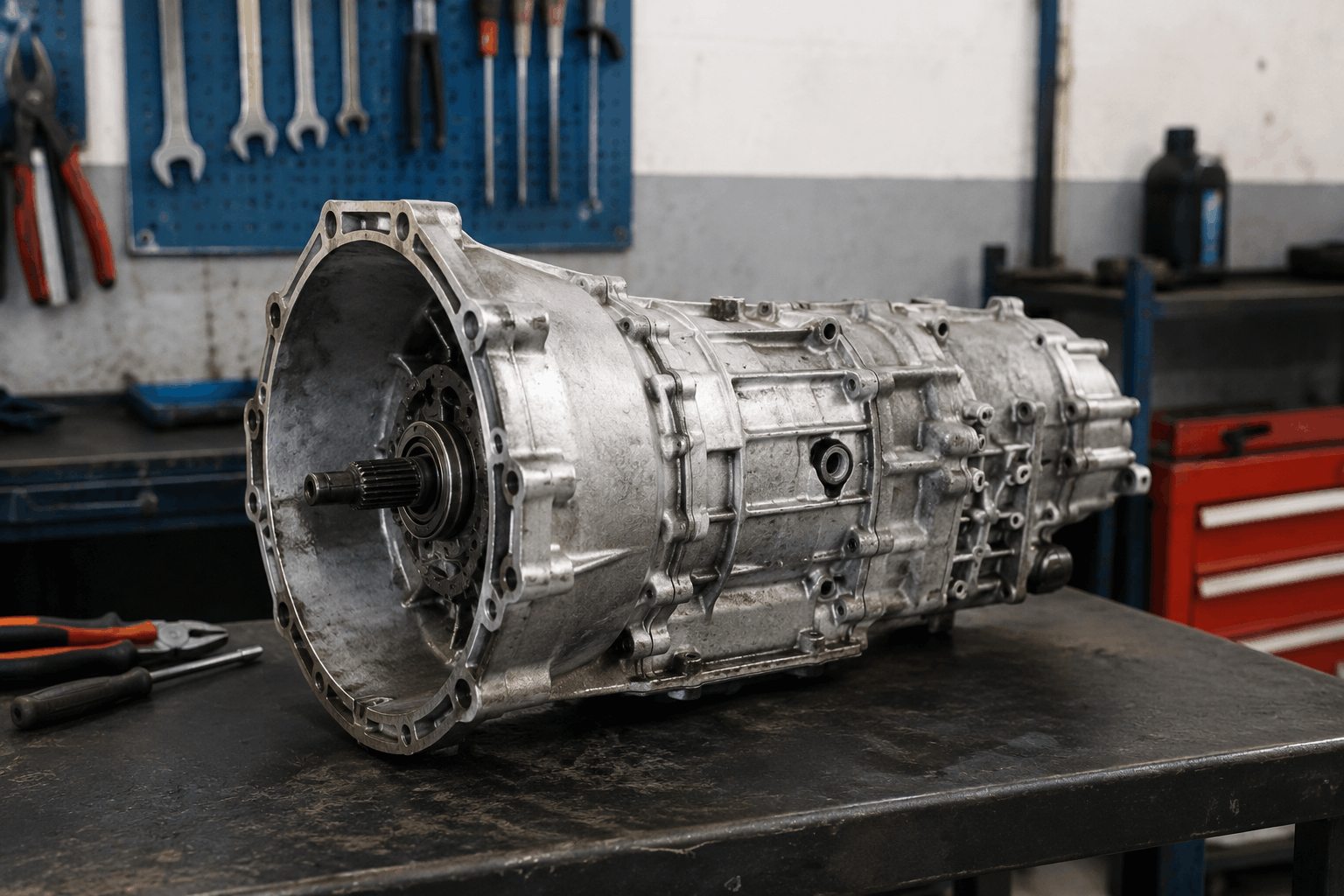
Whining or humming from the transmission area can originate from worn bearings, gears, or other rotating components. The timing and behaviour of the noise carries more diagnostic weight than its volume.
Note whether the noise:
- Changes during acceleration.
- Appears during deceleration.
- Occurs in one particular gear.
- Changes when the clutch pedal is depressed.
- Becomes more pronounced as the vehicle reaches operating temperature.
A noise present only in one gear provides different diagnostic information from one that appears across several ratios. The specific conditions that trigger or modify the sound identify which components require inspection.
The same applies across the drivetrain. A differential, wheel bearing, driveshaft, or clutch component can generate sounds that drivers attribute to the gearbox. Noise behaviour under different load and speed conditions establishes whether the source is the gearbox or another drivetrain component.
Where the noise pattern indicates the differential rather than the gearbox, differential repairs require a separate inspection and a distinct diagnostic process from gearbox assessment.
Difficult Gear Selection: Mapping the Pattern to Find the Cause
Shifting difficulty can result from clutch problems, selector linkage faults, synchroniser wear, or internal gearbox damage. The fault pattern determines where to begin.
Look at the Pattern
- One gear affected: A worn synchroniser or a specific internal component could be behind it.
- Several gears affected: Points toward clutch disengagement, linkage condition, or damage running deeper inside the unit.
- Loose gear lever: Time to check the selector mechanism or linkage.
- Gear feels blocked: Could trace back to the clutch, selector mechanism, or something internal.
- Problem worsens: Fluid condition, component wear, and operating clearances all need a look.
Pushing the gear lever through resistance only speeds up wear on the engagement components. If selection is taking unusual effort, tracking down the cause early stops the condition from getting worse.
For shifting problems that won’t go away, a gearbox repairs specialist can work through the clutch, linkage, and internal gearbox condition before deciding what work actually needs doing.
Gears Jumping Out: Why the Conditions Matter as Much as the Symptom
A gearbox that disengages under hard acceleration, deceleration, or engine braking needs a proper look, since worn internal engagement or selector components are often the cause. The exact conditions under which the gear jumps out go a long way toward narrowing down which components are involved.
| When It Happens | Why It Matters |
|---|---|
|
Hard acceleration |
Heavy drivetrain load can expose engagement problems |
|
Deceleration |
A shifting load can bring worn components to light |
|
One particular gear |
Points toward a specific internal fault |
|
Hot gearbox |
Temperature changes component behaviour and clearances |
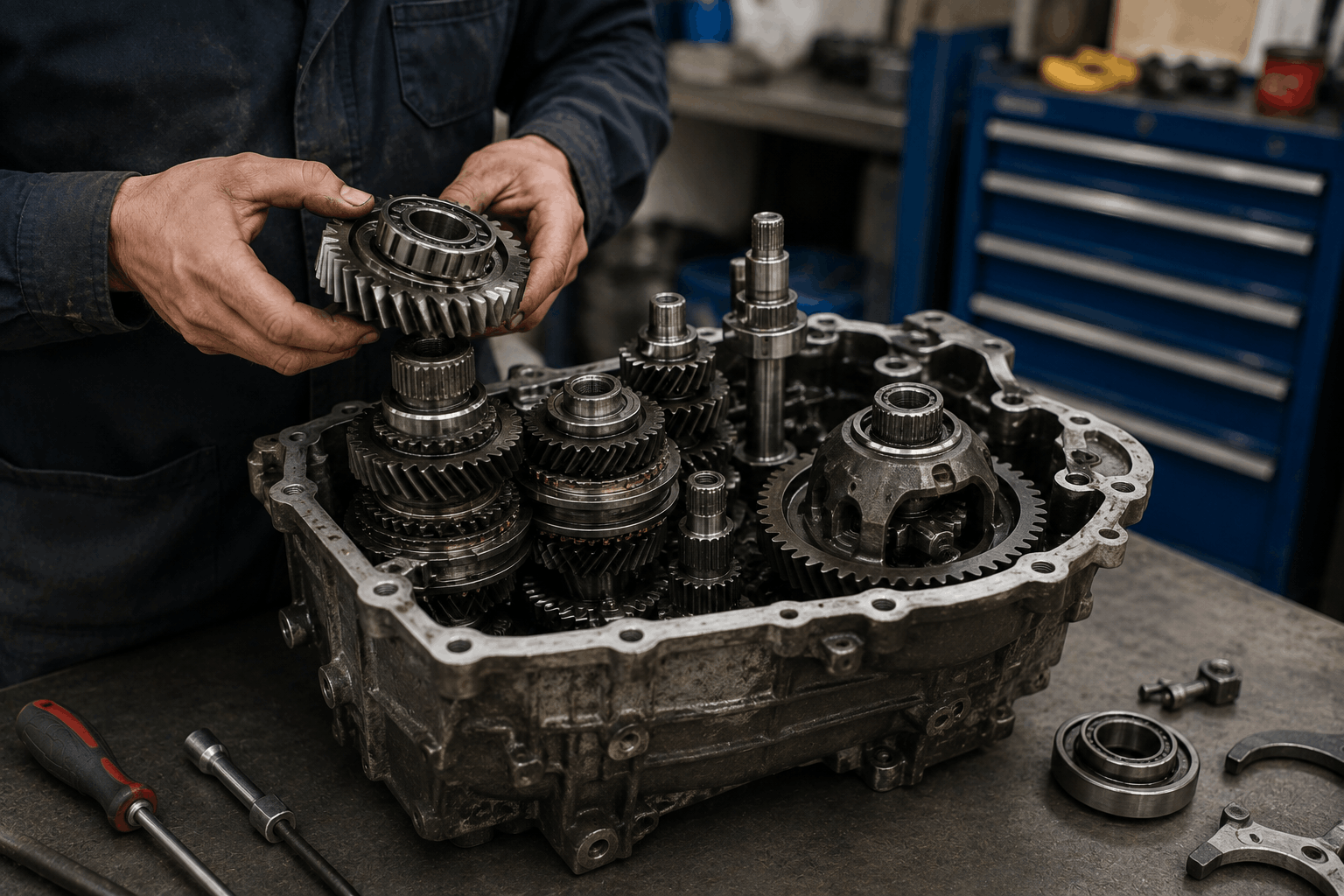
Once inspection confirms internal wear, a gearbox rebuild might be the right call. That means pulling the unit apart and assessing the gears, synchronisers, bearings, and seals, then replacing components based on what’s actually confirmed rather than what seems likely.
A gearbox rebuild should follow because inspection confirms it is necessary, not because the gearbox produces a noise.
What Does Gearbox Fluid Signal Towards?
Gearbox fluid provides diagnostic indicators about lubrication quality and internal condition, but fluid appearance alone does not identify a mechanical fault.
Low fluid may indicate a leak. Metal particles or contamination in the fluid point to internal wear already underway. Using the wrong fluid specification can throw off gearbox operation entirely, so it’s worth confirming the manufacturer’s recommended fluid before topping up or replacing anything.
The fluid condition, leaks, strange noises, and resistance while shifting all deserve a proper investigation rather than just being watched over time. Fresh fluid might fix a lubrication shortfall, but it won’t do anything for worn gears, bearings, or synchronisers. Ongoing noise or shifting trouble calls for a mechanical assessment, not just a fluid change.
Symptoms That Warrant a Professional Inspection
A symptom that keeps coming back, gets progressively worse, or shows up alongside another warning sign calls for a professional look rather than more waiting and watching.
Arrange an inspection when the vehicle shows:
- Repeated gear crunching on the same ratio.
- Difficulty selecting one or more gears.
- A gear disengaging under load.
- A loose or abnormally stiff gear lever.
- Fluid leaking from the gearbox area.
- Vibration during gear changes.
- A clutch that does not appear to fully disengage.
- A new whining or humming noise from the transmission area.
Before the appointment, note which gear is affected, whether the symptom occurs when the vehicle is hot or cold, whether it appears during acceleration or deceleration, and whether depressing the clutch changes the noise. That information focuses the diagnosis and reduces assessment time.
Where the fault originates in the differential rather than the gearbox, a diff specialist handles that work separately through a distinct diagnostic and repair process. For automatic vehicles, an automatic transmission specialist applies a different diagnostic approach because transmission design and fault patterns differ substantially from a manual system.
Targeted Repair vs Full Rebuild: Matching the Response to the Finding
The appropriate repair follows from what inspection confirms, not from the symptom that prompted the visit.
| Finding | Possible Solution |
|---|---|
|
Linkage or external component problem |
Targeted repair |
|
Seal or minor component failure |
Component replacement |
|
Isolated internal fault |
Internal repair where practical |
|
Multiple worn internal components |
Rebuild assessment |
|
Extensive damage |
Repair versus replacement comparison |
A transmission rebuild involves more extensive internal work than a targeted repair and should follow a thorough gearbox inspection. Replacing serviceable components adds cost without addressing the confirmed fault.
Get Reliable Manual Gearbox Repairs
Conclusion
Gear crunching, bearing whine, difficult shifting, and gear disengagement are useful diagnostic indicators. None of them constitute a diagnosis on their own. The timing, location, and conditions surrounding each symptom provide the information that determines the correct repair path.
For drivers in Melbourne, Victoria Differentials brings decades of experience to manual gearbox repairs, covering diagnosis, servicing, gearbox rebuilds, differential repairs, and repair decisions across manual transmissions. Whether the fault requires a diff specialist, a transmission rebuild, or an automatic transmission specialist, early inspection when a new symptom appears produces consistently lower-cost outcomes than continuing to operate the vehicle until the fault progresses.
FAQs
Can a clutch problem sound like a gearbox fault?
Yes. A clutch that does not fully disengage generates grinding, difficult gear selection, and other symptoms that replicate internal gearbox problems. The clutch operating system should be assessed before the gearbox is presumed to be at fault.
Why does my gearbox become noisier when warm?
Temperature affects fluid viscosity and component clearances. A worn component becomes more pronounced once the gearbox reaches operating temperature. Note whether the noise appears in a specific gear and whether acceleration or deceleration modifies it before the inspection.
Is it safe to keep driving when a gearbox jumps out of gear?
The fault should be assessed promptly. Repeated gear disengagement indicates worn internal or selector components. Operating the vehicle without diagnosis allows the problem to develop further and increases the scope of required repair.
Can gearbox oil fix a noisy gearbox?
It comes down to what’s actually causing the noise. Having the right fluid level and specification matters for proper gearbox function, but no amount of fluid replacement will fix worn gears, bearings, or synchronisers. Ongoing noise needs a mechanical assessment rather than being treated as a simple lubrication fix.