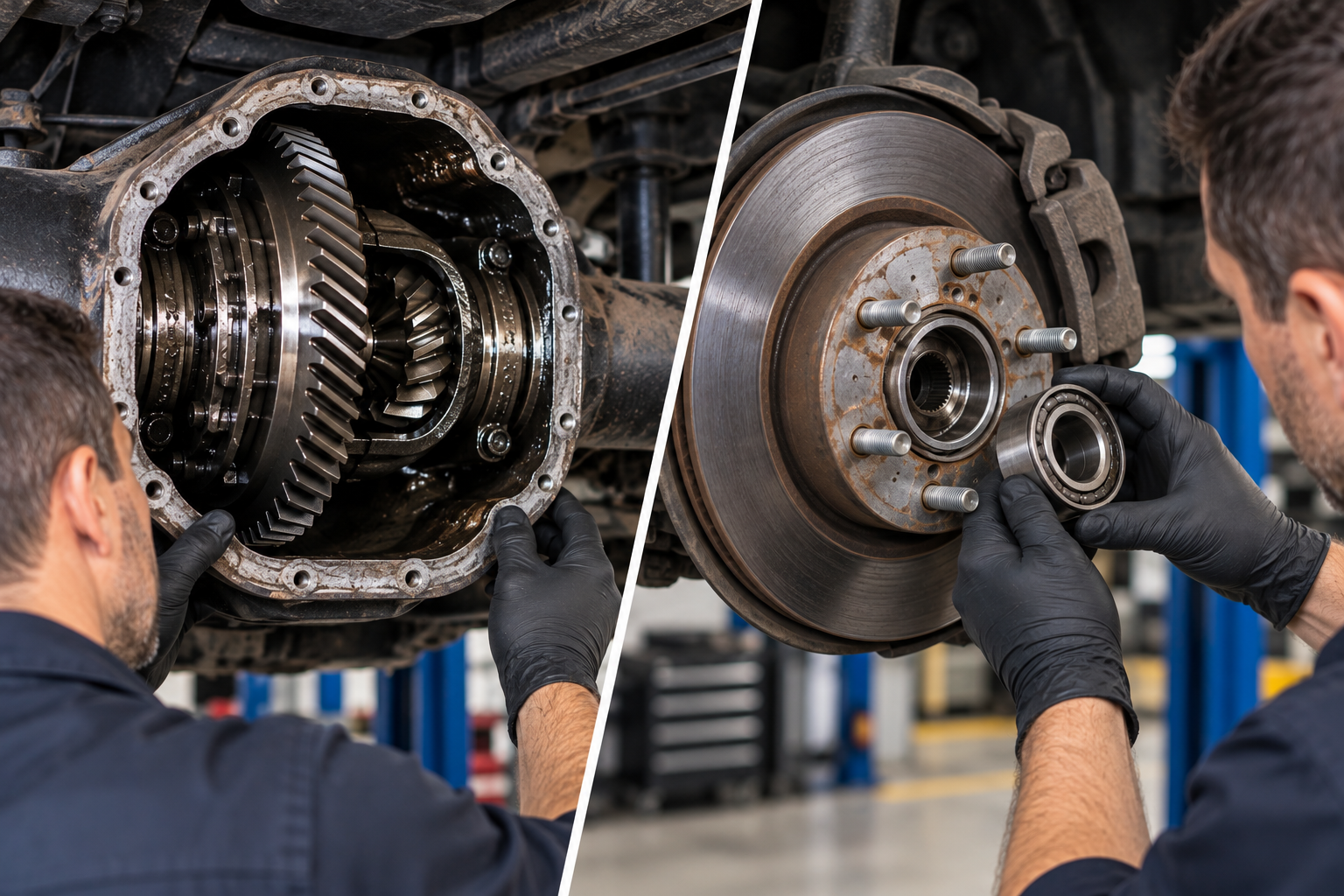
A new whine from the rear of your vehicle can be hard to place. It may sound like a differential, wheel bearing, tyre noise, or another driveline component.
Before assuming you need major differential work, pay attention to when the noise appears and how it changes:
- Does it get louder under acceleration?
- Does it change when you lift off the throttle?
- Does it alter when you gently turn left or right?
- Does the sound follow road speed rather than engine speed?
At Victoria Differentials, with over 30 years of experience working with differentials and transmissions, these details form an important part of diagnosing differential repair issues in Melbourne. This blog explains the practical clues technicians use before recommending further work.
Focus: Knowing differential whine from wheel bearing noise by listening to when the sound occurs.
Key Clues: Acceleration, deceleration, cornering, road speed & vibration.
Diagnostic Approach: A differential-related noise typically changes with drivetrain load, while wheel bearing noise is often a function of side loading during light cornering.
Professional Insight: Victoria Differentials looks at the entire driveline before recommending a transmission rebuild or differential repair.
Result: Better diagnosis before parts change or major repair.
Does Differential Whine Change When You Accelerate or Decelerate?
Yes. If you notice a whine that is quite different between acceleration and deceleration, this can be a sign of differential gear or bearing issues. The load on the ring and pinion changes when the vehicle goes from driving to coasting and that can change the sound.
A useful first observation is the throttle relationship:
| Noise Pattern | Possible Area of Concern |
|---|---|
|
Whine mainly under acceleration |
Ring and pinion gear wear or setup issue |
|
Whine mainly while coasting |
Pinion bearing or coast-side gear contact |
|
Noise at most speeds and conditions |
Bearing or more advanced internal wear |
|
Clunk when getting on or off the throttle |
Backlash or another driveline component |
These are diagnostic clues, not a diagnosis by themselves. Gear condition, bearing condition, lubricant level and previous repairs can all affect noise.
What most experts miss: the exact speed range matters. A noise that appears between two particular road speeds gives a technician a useful starting point. Recording whether it happens at 40 km/h, 60 km/h or highway speed can be more useful than simply describing it as a “loud whine”.
Diagnose Your Differential Noise With Confidence
How Can You Tell a Wheel Bearing From a Differential?
A wheel bearing is more likely when the noise changes with cornering or side-to-side loading, while a differential problem is more closely related to drivetrain load. Technical diagnostic procedures commonly use acceleration, deceleration and gentle side loading to separate these possible sources.
A wheel bearing often produces a hum, rumble or growl that increases with road speed. During a safe test drive, a technician may listen for a change in noise as the vehicle loads one side during a gentle turn.
A differential-related sound tends to provide different clues:
- Noise changes when the throttle is applied or released.
- The sound seems to come from the centre or rear driveline.
- The pitch follows vehicle speed.
- Fluid leakage may be visible around the differential.
- The noise can become more noticeable after the drivetrain has been working under load.
Tyres can create another convincing false lead. Uneven tread wear and certain tread patterns can produce a humming sound that changes with the road surface.
What most experts miss: simply listening beside the car rarely identifies the faulty component accurately. Noise travels through housings, axles and the body, making the apparent location misleading. A structured road test followed by an inspection is more useful than replacing the component that sounds closest to your ear.
What Should You Check Before Assuming You Need a Differential Rebuild?
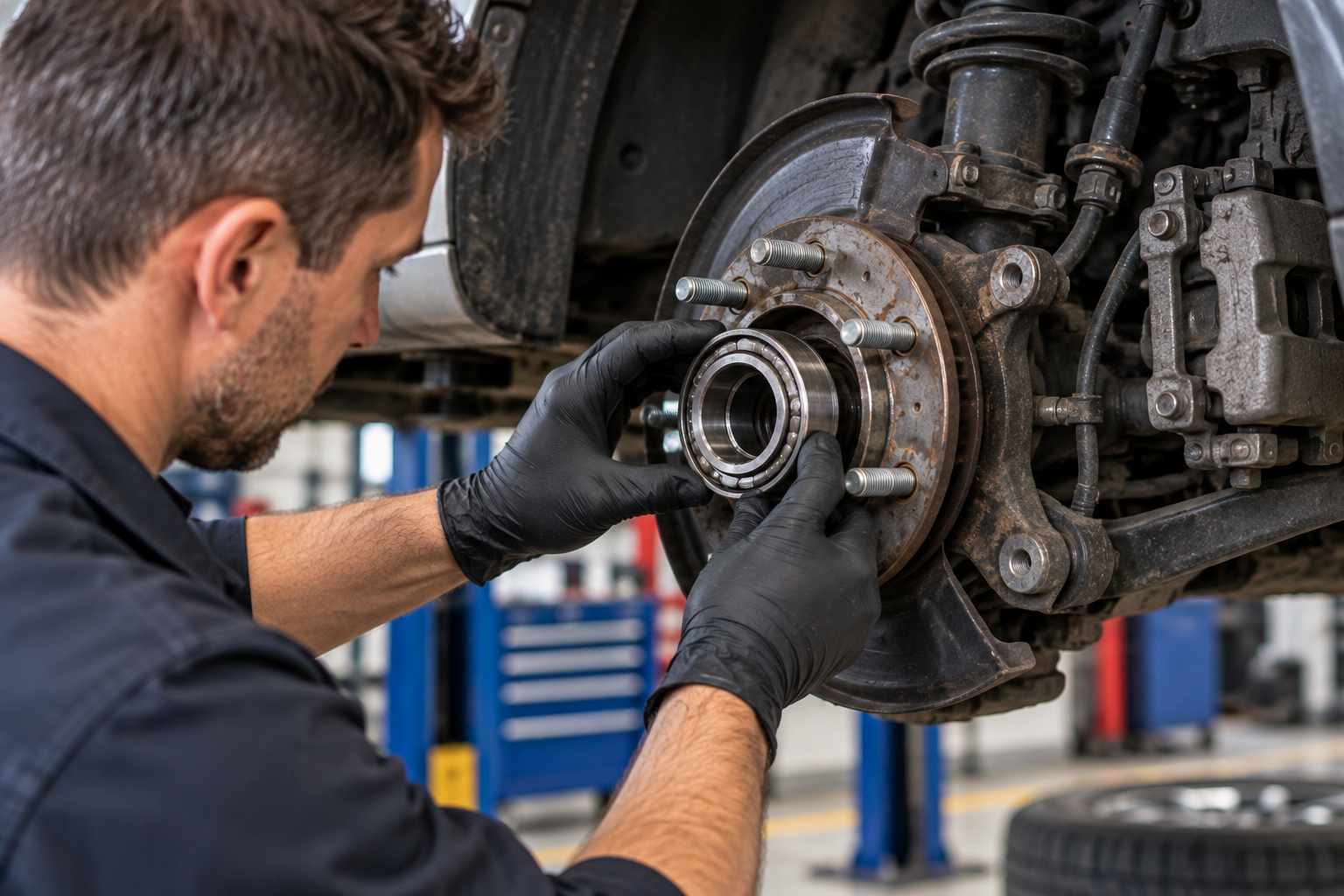
Check the noise pattern, fluid condition, leaks and related driveline components before deciding that a rebuild is required. A whine does not automatically mean the differential needs to be completely rebuilt.
Start With These Key Checks
1. Differential fluid
Low, contaminated or unsuitable lubricant can contribute to noise and accelerated component wear. A fluid inspection can also reveal metal contamination that warrants closer examination.
2. External leaks
Check around the pinion seal, axle seals and differential housing. A leak can gradually reduce lubricant level and increase internal wear.
3. Wheel bearings and tyres
These should be assessed before condemning the differential because both can create speed-related humming or rumbling.
4. Driveline components
Universal joints, driveshaft components, mounts and other parts can produce noises that drivers commonly attribute to the diff.
This is where experienced transmission specialists add value. A proper diagnosis looks at how the complete driveline behaves rather than treating one noise as proof of one failed component.
When Does a Whine Actually Point Towards Internal Differential Wear?
If the noise is always relative to the drivetrain load and inspection reveals worn gears, bearings or incorrect gear clearances then internal differential wear is more likely.
The technician may need to open the internal assembly to determine if the components need to be replaced, repaired or if a complete rebuild is necessary.
Ring and pinion gears rely on precise contact and correct clearances. Changes caused by wear, bearing movement or previous setup work can alter gear contact and produce a whine.
Service information also identifies incorrect backlash, pinion setup, inadequate lubricant and gear damage as possible causes of differential noise.
The decision should therefore follow a sequence:
Noise pattern → road test → external inspection → fluid assessment → component testing → internal inspection if required.
That sequence can prevent unnecessary dismantling and helps separate a relatively contained repair from a situation where a gearbox rebuild or differential rebuild needs consideration.
For drivers, the practical point is simple: do not approve major work based on the noise alone. Ask what test identified the suspected component and what condition was found.
What Happens If You Keep Driving With a Differential Whine?
Continuing to drive with an unexplained whine can allow a relatively contained fault to progress, particularly if lubricant loss or bearing wear is involved. The risk depends on the cause, severity and vehicle.
A mild noise does not tell you how much internal damage exists. A worn bearing can affect gear alignment, while damaged gear teeth can continue to deteriorate as the vehicle is driven.
Seek an inspection sooner if the noise is accompanied by:
- A sudden increase in volume.
- Vibration through the floor or seat.
- Oil leaking from the differential.
- Clunking when accelerating or decelerating.
- Grinding or harsh mechanical sounds.
- Changes in handling or driveline behaviour.
When Should You Seek Professional Differential Diagnosis?
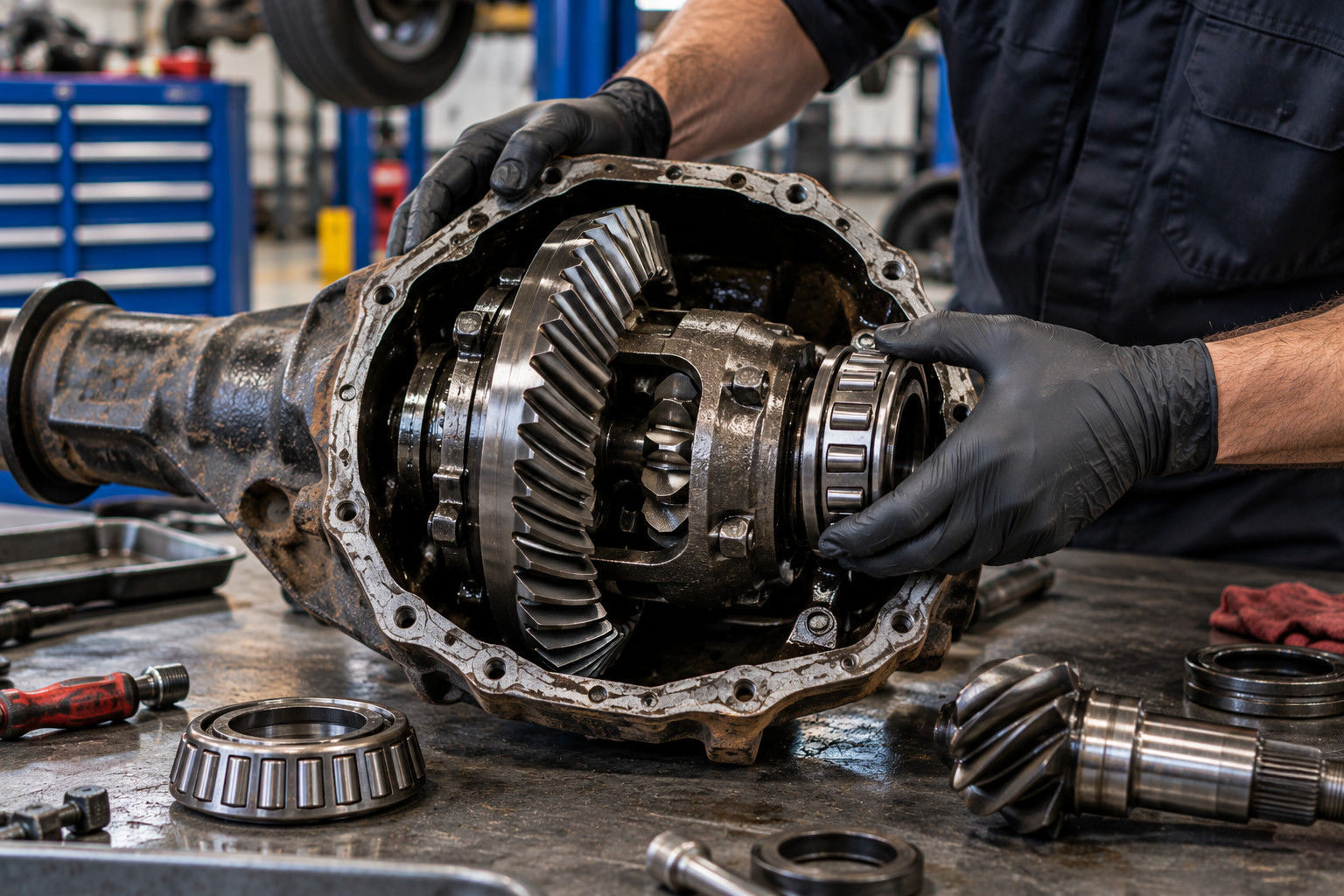
Seek professional diagnosis when a new whine persists, changes with acceleration or deceleration, or comes with vibration, leaks or driveline movement. Early assessment gives the technician a better chance to identify the source before unnecessary damage develops.
The same principle applies when arranging manual gearbox repairs: identify the actual source first, then decide what level of repair the component needs.
A useful question to ask any workshop is:
“What evidence shows the differential is responsible for the noise?”
That question shifts the conversation from guessing to diagnosis.
Check Your Differential Before A Rebuild
Conclusion
A differential whine and wheel bearing noise can sound remarkably similar from the driver’s seat. The key clues are when the sound occurs, whether it changes under acceleration or deceleration, and whether cornering affects it.
For Melbourne drivers, accurate diagnosis matters before committing to significant differential repair work. Victoria Differentials, as a different specialist has experience across differentials and transmissions, helping assess the source before repair decisions are made. If your vehicle has developed a persistent whine, get in touch with us for an assessment.
FAQs
Can a differential whine be caused by low fluid?
Yes. Low or contaminated differential lubricant can contribute to noise and internal wear. However, topping up fluid does not automatically fix the underlying problem. A technician should check why the level is low, inspect the fluid condition and assess the differential for existing damage.
Can a wheel bearing sound louder on one side?
Yes. A worn wheel bearing can produce a noise that becomes more noticeable when the vehicle’s weight shifts during cornering. However, road noise, tyres and other driveline components can create similar symptoms, so cornering behaviour should be treated as a clue rather than proof.
Does every differential whine require a rebuild?
No. The required repair depends on what inspection finds. The cause may involve lubricant, a bearing, gear wear or another driveline component. A complete rebuild becomes relevant when internal components or gear setup require substantial work.
Should I record the noise before taking my car to a workshop?
Yes. Note the approximate speed, whether you were accelerating or coasting, whether the noise changed while turning and whether the vehicle had been driven for a short or long period. A short recording can help, although an in-person road test remains important